The History of Erzgebirge Wooden Figures
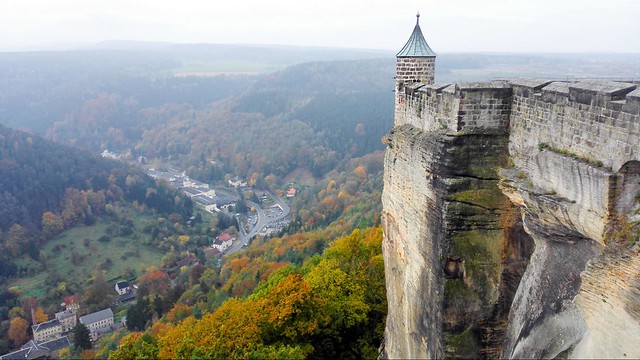
There is no place more famous for its wooden toy making than Erzgebirge, Germany’s Ore Mountain Region of Saxony, which sits between the border of Germany and the Czech Republic. In the Czech Republic, it is known as Krušné hory.
This beautiful region is already well-known for its history of mining for silver and other precious metals. But, during the 1700s, this industry began to dry up, meaning that jobs for the local community became scarce. Fortunately, the villagers found a new solution to poverty and unemployment — plenty of lumber trees across the landscape meant that the villagers could practice wood crafting as a new source of income. Another advantage to this new skill was that it could be perfected by people of all ages, with Erzgebirge wooden figures made by families who passed their wood crafting methods and traditions from generation to generation.
For the families in the village workshops, the handcrafted toy figurines represented the traditional occupations of their neighbors, such as the farmers, hunters, and the most honored of them all — the miners. Today, many Erzgebirge wooden figures are also inspired by animals and nature and are often assembled to illustrate the history of the Ore Mountains villages and experiences in the mines.
Which Are the Most Well-Known Erzgebirge Wooden Figures?
The Miner (German: Bergmannsfigur)
<
For many families of Erzgebirge, mining was the most distinguished occupation throughout the 19th century. The miner figurine is a traditional Christmas decoration and was handcrafted to bear two candles while sitting alongside an angelic figurine. In the past, the angels and miner figurines were put onto a windowsill on behalf of the children of the family, as the angels represent the protective celestial power, while the miner figures were actual images of the sons who risked their lives in the mines day by day.
Many German miner figurines still to this day can also be found either holding a trumpet, pickax, or a miner’s tool, as well as having a stencil of the hammer and pickaxe on their helmets.
The Smoking Man(German: Räuchermann)

The Smoking Man figurine is a traditional German incense smoker designed to blow smoke out through its mouth when lit. Some Smoking Man figures are modeled on Father Christmas, miners, craftsmen, foresters, or the local townsfolk of the Erzgebirge region.
In modern times, these have been developed into non-traditional figurines, such as houses or dinosaurs.
The Nutcracker (German: der Nussknacker)
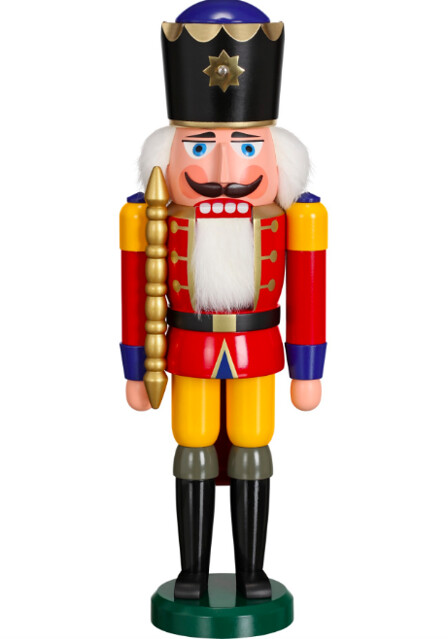
The most famous Erzgebirge wooden figureof them all — The Nutcracker.
Originating from the 17th century, these wooden dolls are also known as Christmas nutcrackers, which are most commonly made to resemble a toy soldier. In German tradition, the soldiers are symbols of good luck, frightening away any malevolent spirits, as well as serving as “protectors of the home”.
Nutcrackers were fully functional for the first half of the 20th century. Yet, this has changed in recent times as a significant proportion of these are primarily handcrafted for decorative purposes only.
Did you know? An average handcrafted nutcracker doll comprises about 60 separate pieces and is finished off with traditional hand-painted bright colors.
Every one of our Erzgebirge wooden toy crafts is still handcrafted in Germany using the same traditional craftsmanship known across the world. Take a look at our diverse selection of Erzgebirge wooden figures on our website.